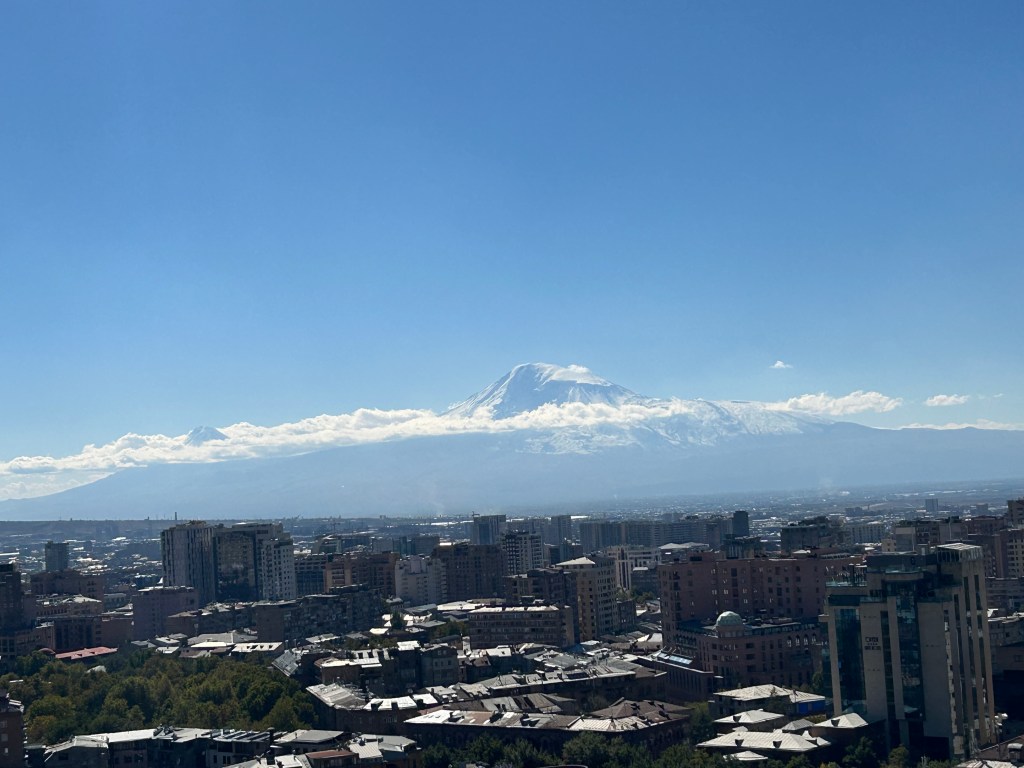
What can I tell you that every westerner does not already know about Armenia?
Basically anything, I would guess
So I thought I will start with little a touch of history… and how it affects my experience here.
The country of Armenia, as it exists today is a very young country. Claiming its independence during the dissolution of the Soviet Union in the fall of 1991, it has a brief history knowing its current boarders (even more brief when you take into account the recent war with Azerbaijan).
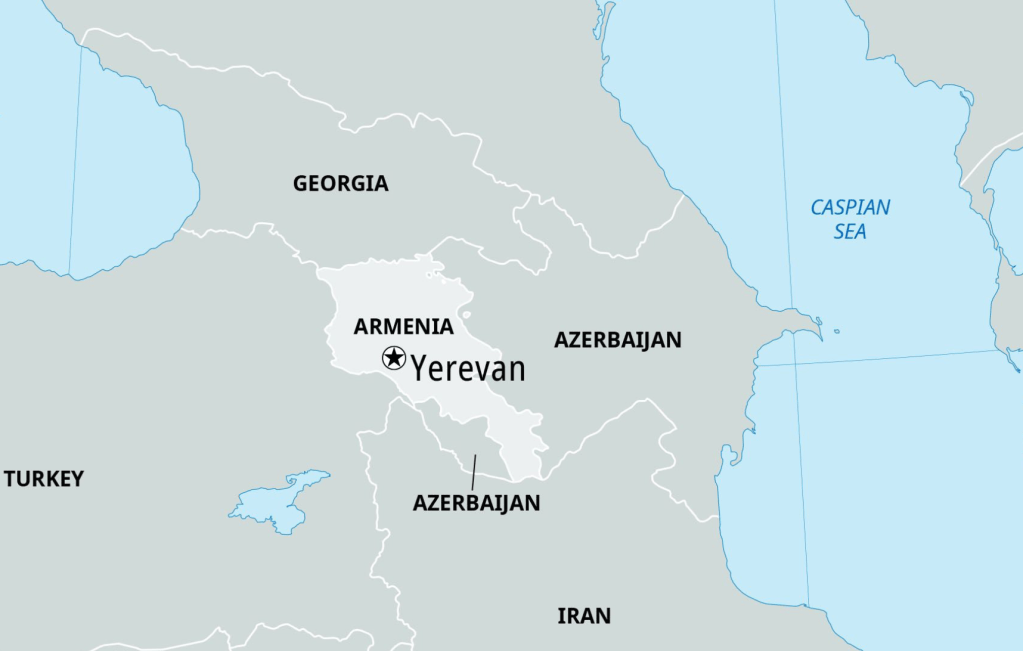
The Armenians, however are an old people with a very long history within the regions reaching west, past Anatolia, and east to Persia and from the south, in Jerusalem up to Tbilisi, Georgia.
This history includes massive empires, as well as massive diasporas. Over time this has cultivated a number of different dialects, expectations, and entire sets of cultural rules.
I have learned, in my time here of the difference between Eastern, Western and Persian Armenian, not solely as dialects of languages (which they are), but also as distinctions in ways of life.
These differences have proven to be hugely impactful to my experience of living here.
When I landed in Yerevan, I came with my Armenian aunt, Susan, who was with me for the first week. She had never been to Armenia, and did not grow up speaking Armenian, and so together we were foreigners in a foreign land.
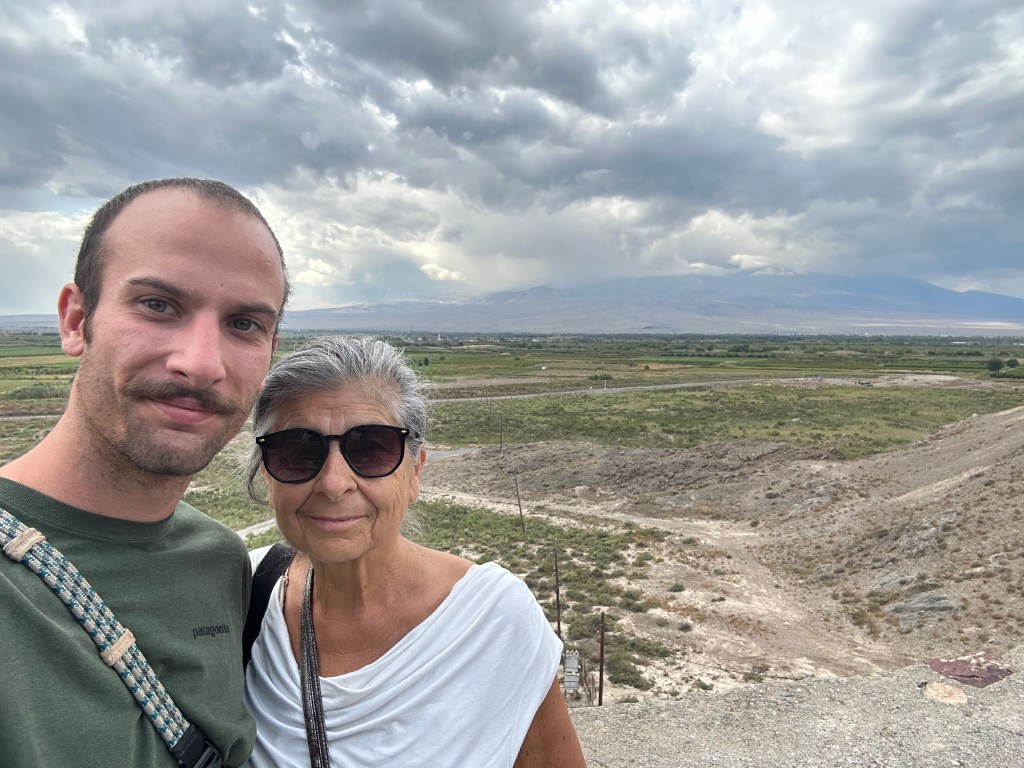
I think we both had some expectations, maybe unfair ones, but they existed nonetheless.
I had always viewed Armenia as a middle eastern society, a community that was integrated with the muslims of the Ottoman Empire and thus shared a large amount of that culture and energy.
Now as it turns out, I was right, and I was also very wrong.
You see, the largest split in Armenian culture is between the Eastern and Western Armenians, and the most dramatic differences in this split today have a lot to do with who was persecuted in the genocide of the 20th century.
Western Armenians are known commonly as diaspora Armenians, the Armenians who were forced to flee their homes in Anatolia, southern Turkey, and even parts of what we now consider northern Syria.
Eastern Armenians were mostly outside the boarders of the Ottoman Empire, and living under the protection of the Soviet Union, and did not flee. This included the territory that is modern-day Armenia.
When the Turks began the marches, this schism was accentuated, as some fled, and others did not. The easterners continued to be integrated into very Russian lives, and the westerners continued to live more middle eastern lives in Persia, Lebanon and Israel. After the genocide, these two groups lived these lives apart from each other, and swung further and further in different directions.
When I landed in Yerevan I was immediately shocked by the Soviet feeling. It was visceral and it ran a fear of my own miscalculations up my spine.
The people were immediately colder than I expected. They did not have the middle eastern liveliness I have experienced, and I thought for a moment that it was just my American Ignorance that had landed me in such a misunderstanding.
In my first view of the city, the old apartment buildings stood tall and gray against the skyline. All perfect rectangles. All drab brick and concrete. AC units slapped on the outside like ornaments on a Christmas tree made of sidewalk. Laundry lines being the only other break in the grey along the bottoms of the tiny excuses for windows.
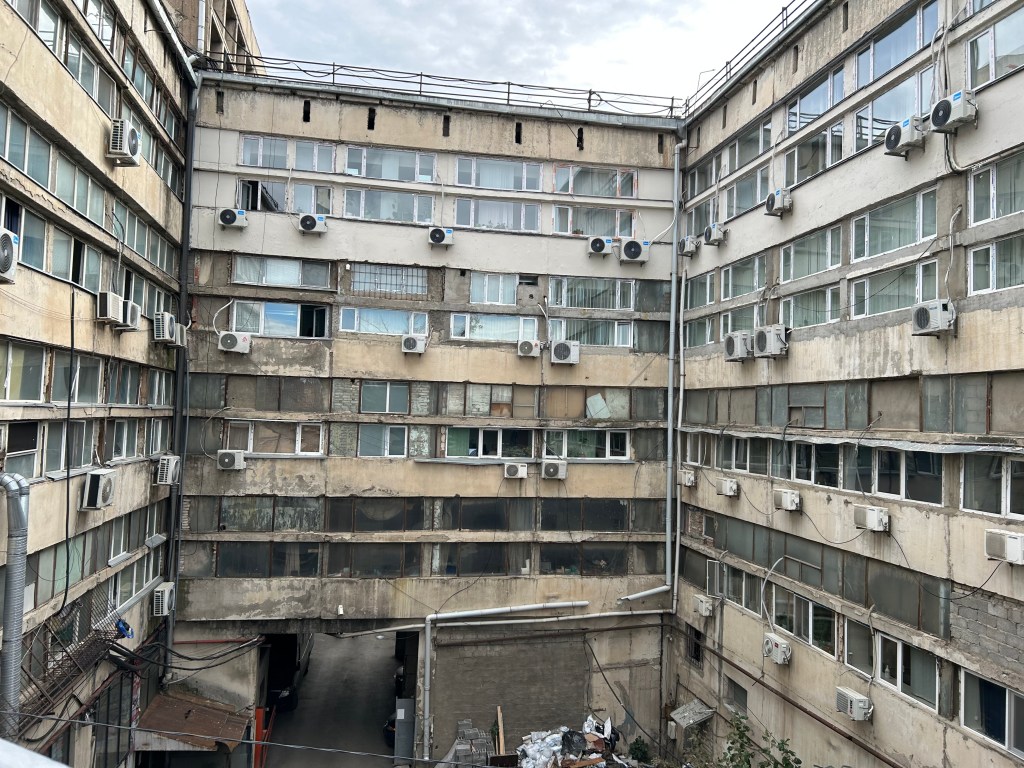
It was not the same as my experience of Parisians, the people did not scoff, and they were not rude, but they were not friendly either. Shop keepers did not smile when we walked through the doors, or ask us what we needed. People on the street did not meet our gaze, and when they did, our friendly eyes were so obviously foreign to them that they would stare for a moment, brows furrowed.
I found quickly though, that this perceived coldness was just external, and that it only took a moment or two to break through it, especially with the younger generation. There is a genuine kindness in the eastern Armenians, it just took a moment to get to it, and the real problem seemed to be my American tendency for performative niceness. It is not the New York kind of directness here, but thats the closest to an American equation I can think of. There is no coddling, and no expectation of some kind of act being put on, but the people are direct, open, and very caring when you get to know them.
There are also very beautiful parts to the city of Yerevan. Much of the city is new, as a large earthquake did massive damage to the city in 1988. Although you can tell the Soviets started the rebuild of the city, you can also tell that they did not finish it. There are large art installations, a grand Opera hall, big beautiful buildings of government, and city squares that feel well planned and open, welcoming.
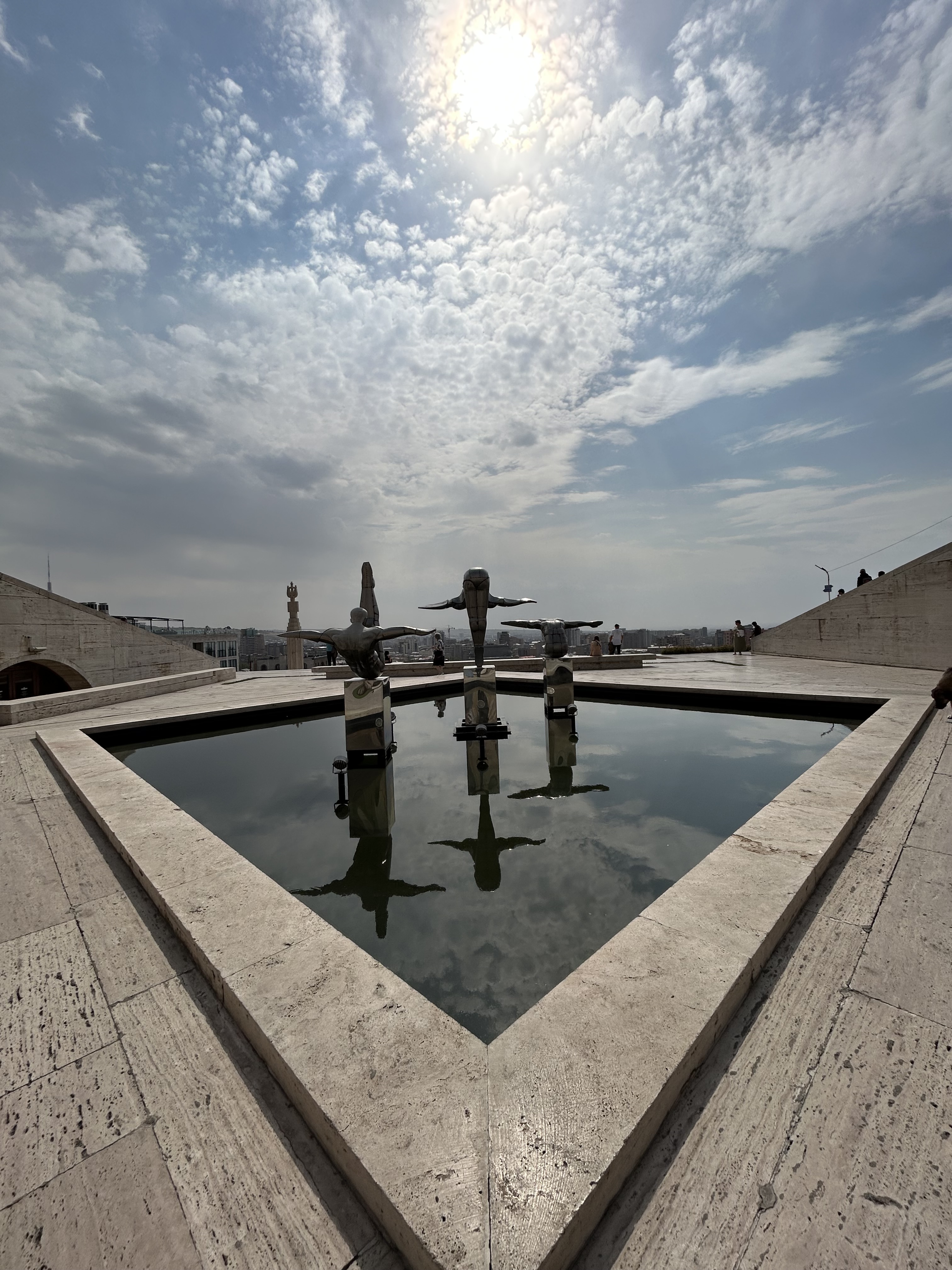


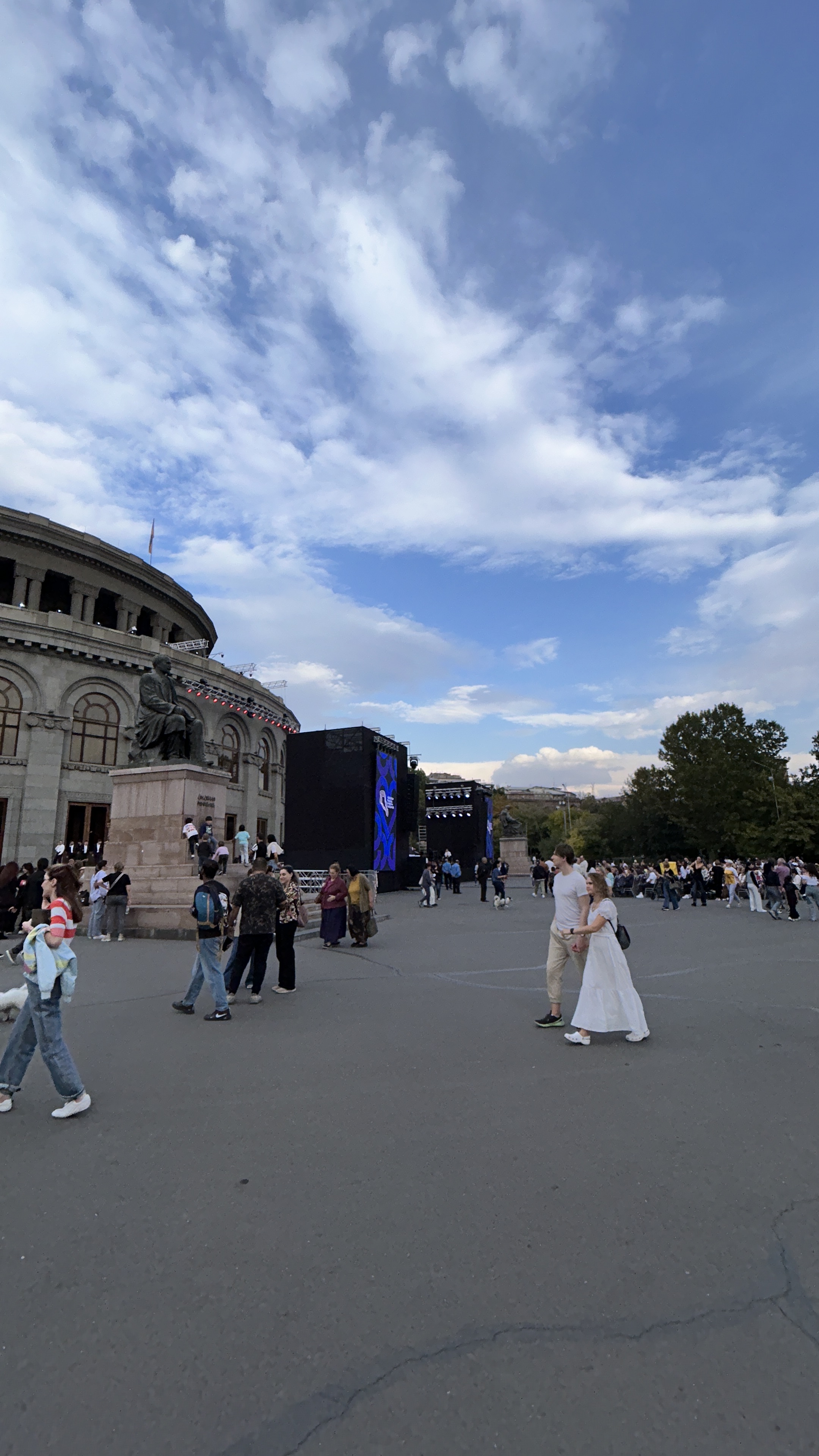
As I mentioned in my last post, my grandfathers oldest brother, Souren, stayed behind with the family business while the rest of his siblings immigrated to the Americas. This pocket of the family found grounding in Aleppo, and lived there for many years.
When the Syrian civil war hit in the spring of 2011 the family was vacationing in Yerevan, all together.
They have never returned to Aleppo from that vacation.
Quickly finding housing in Yerevan, they began to establish lives here, away from the war torn city they once called home. This is such a harsh thing to imagine. Even as I write it, it makes my eyes well up. There are no stories like this where I grew up, no one in my life that has never seen their home again because war chased them away. I cannot imagine this reality.
Upon arriving they found a lot of the things that I have discussed to be true as well. As western, or ‘Diaspora’ Armenians, their culture is much more middle eastern, which comes with adjectives like open, friendly, verbose, and caring.
As they settled in they say they were shocked at the soviet coldness, and how out of place they felt amongst other Armenians.
They also say however, that in the years since then, more an more western Armenians are moving to the city, as it has become a homeland for Armenians everywhere. It is a very exciting thing for the Armenian people to once again have physical boarders to call their own.
They are pleased to say this movement of western Armenians is making it more lively here, more spirited. They refer to it as the “Renaissance of Yerevan”.
A large part of why I am here is to meet them, and so in the first couple of days Susan and I sat down with them for lunch.
Immediately I was shocked at their warmness. They were so excited, as were we, to be reconnecting with long lost family after so much time.
The family here is led by a strong matriarch, Meline, my father’s (and Aunts’) cousin. She is caring and warm and also sharp and fierce. The kind of Mother and Grandmother that will take care of any issues you have, without question, and without letting anyone stand in her way.
Meline’s oldest is her son, Harout, and then her two daughters, Arshaluice, and Arax.
They each have their own children, whose names I will not list for the sake of saving you, the reader, at least for this post. You will however learn my family tree if you continue to follow me. It’s kind of like half of the point of what I’m doing.
Okay I’m listing one, the closest in age to me, Hovig (22), who is taking the selfie below.

Pictured here: Susan, and Hovig (Arshaluice’s son) up front.
From left to right in the back: Arax, Yours Truly, Meline, Lucine – Harout’s mother-in-law, and Arshaluice.
I hope that this provides some context for the city I have begun to call home, and the family that I have found here. It is a fascinating place with multitudes to explore and a complex history to learn.
While I have been here for about a month and walked most of the streets, I still feel I have an endless amount to learn about the people and the culture here. I have begun to learn Armenian, and have gotten a job teaching English as well, and in my next post I will tell you all about me, and my day-to-day experience in the city.


Leave a Reply