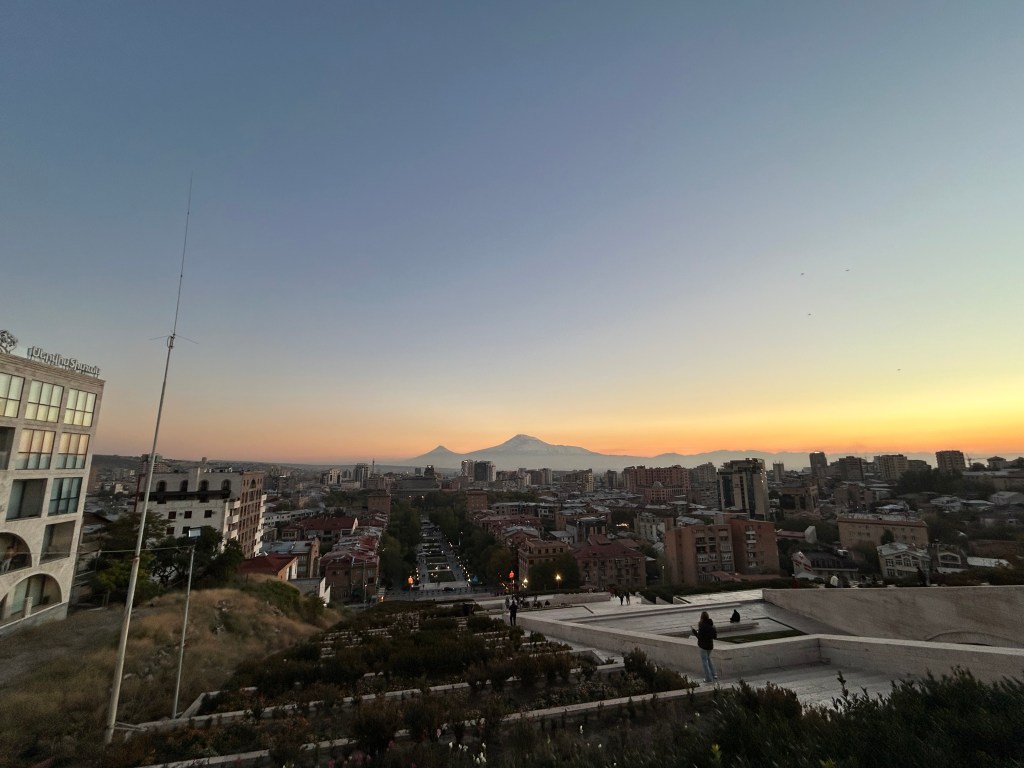
There are some questions that, in this world of unrelenting curiosity, can be asked an infinite number of times. This is both because these questions will produce new answers, and because the reliving of old answers maintains a somewhat infinite relevance. One of these such questions I have been dwelling on lately, and that is the question of defining the term Home.
As I approach the mark of two months living here in Yerevan, I have begun to see the city as such, a sort of home. It is not a place that I would have seen myself living before this trip, nor is it one of my favorite places that I have been. I do not always feel particularly welcome here, and when I walk the streets I often have the sense that I am an unwanted stranger in the eyes that meet mine. Yet, somehow the feeling of home is unmistakable.
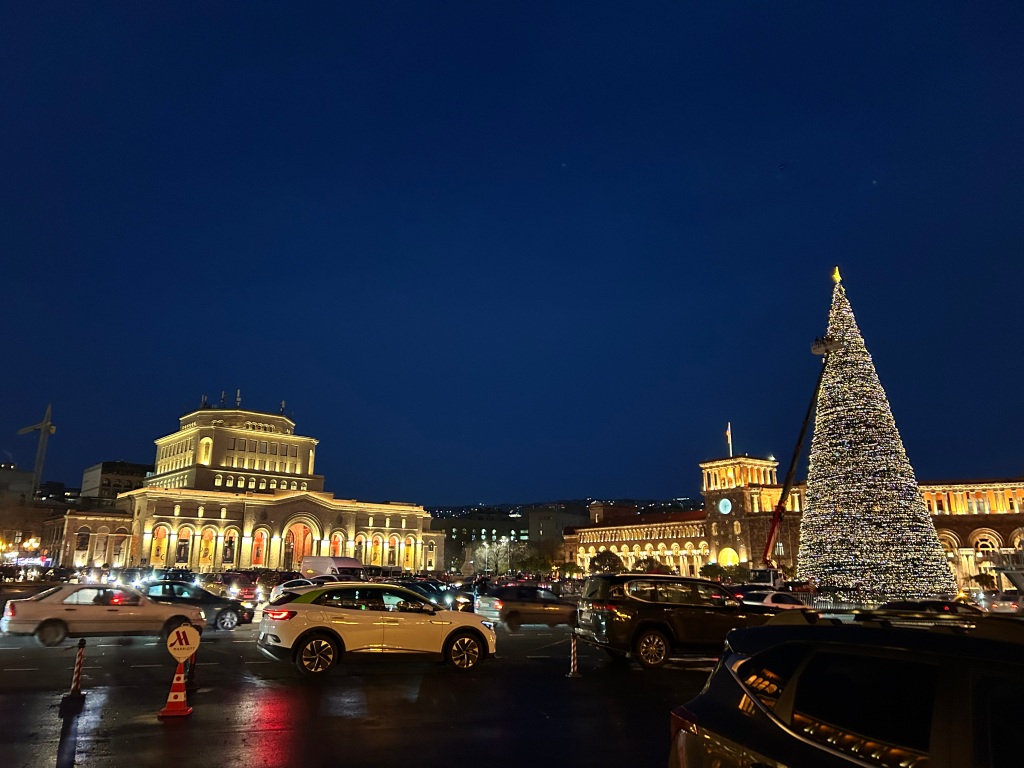
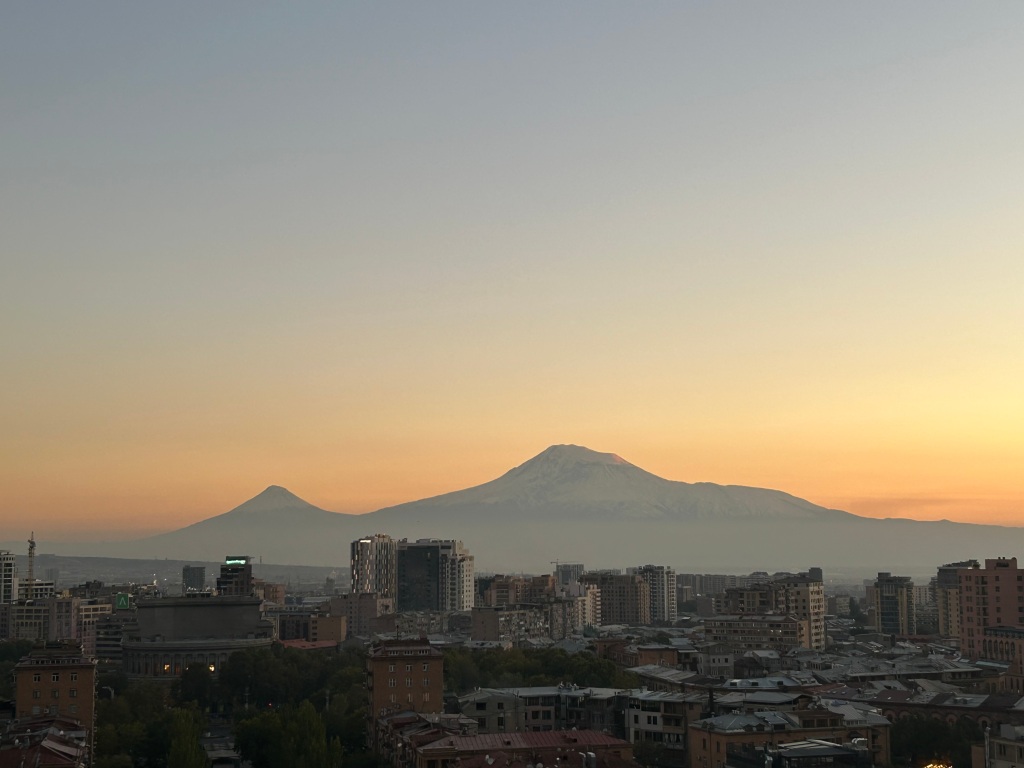
It is a never ending journey I think, the growing ability to find comfort wherever you are. This is some of the most fundamental work I have been doing, and it comes through many different facets. I have begun to study Armenian, a language that makes the exceptions of English seem non-existent, or trivial at best. I have stepped into the corporate world, teaching English and accent reduction to customer service rep’s who have different levels of knowledge of the language. I have walked almost every street in the city, stumbling across and noting every place I can find that serves my favorite Armenian dish, Lahamjoun. I have gotten my own apartment, leaving behind the hostel life, and with it, the familiarity of socializing with other travelers from the western world, causing me to sink further into this culture I have surrounded myself with.
These activities have helped me to feel at ease, and simultaneously productive, but they alone do not make this a home for me. A home is more than just familiarity, routine, and a receding language barrier. I cannot tell you how I know this so concretely, but there is something else, something instinctual about the feeling of a home.
So I wonder, what is it that defines a home if not for the feelings of comfort, routine, love and a shared community? (an answer I likely would have given before moving here).
I will start to answer, as best I know at the moment, by discussing not only myself, but the others I have met who have come to call this place their home.
As I touched on in the last post, there is a large split between Eastern and Western Armenians. Their separate lives are very much informed by their own generational traumas, and their traumas are very different; Western Armenians having been forced through the horrors of the genocide at the beginning of the last century, while Eastern Armenians lived through the strict authoritarian order of the Soviet Union.
As I have met and talked with many different Western Armenians, I have found that as they have started to move into this newly designated ‘homeland’, they have found themselves caught by surprise in many of the same ways I have been. Eastern Armenian culture is cold. You can feel it immediately on the streets, a judgment in the eyes of most people you pass. There is no room for cordiality, and in its place, there is a directness, a sharpness that is cutting and visceral. This is the soviet aftermath, the lingering of what was, and what cannot yet be let go of.
For many however, Yerevan is a safe haven, and not just the Western Armenians fleeing conflicts in Syria and Lebanon.
When I first mapped out a vision for this year, it had different chapters. First, I would spend a chunk of time reuniting with my family, learning a common language with them and exploring this cultural capital that is now home to so many Armenians. My plan for the next chapter was to chase down other diasporas throughout the Balkan region, imagining at the time that I would meet, among others, Ukrainians fleeing their homeland. While I still do not know what I will encounter when I leave Yerevan, I do know that I do not have to venture into the Balkans to meet the Ukrainian diaspora population.
In 2022, a huge influx of both Russians and Ukrainians flooded Yerevan, changing the entire culture of the city in a single, overwhelming moment. Ukrainians fled their war torn homeland, while young, progressive Russians fled a government that they no longer wanted any affiliation with, and had no trust for.
The influx of both of these populations was a surprise to me. I had no expectation of Ukrainians fleeing here, although it makes sense, I never thought of Armenia as a destination for anyone except… well… Armenians. Even more shocking to me (highlighting my American naivety) was the huge population, let alone mere existence, of progressive Russians. Russians who hate Putin as much as we hate… that gross thing that’s about to occupy our White House.
The last group that tied together this understanding of home, were the Eastern Armenians that recently were forced from their homes in Artsakh, (also known as Nagorno Karabakh), a region that until recently was Armenian territory, but was claimed by Azerbaijan in 2020. These Eastern Armenians, on the heels of yet another ethnic cleansing, fled their homes to establish lives in Yerevan, finding refuge here, and with it, a place to establish a new Home. (Below are pictures of the flight of Armenians from Artsakh, as well as a map for geographical reference)
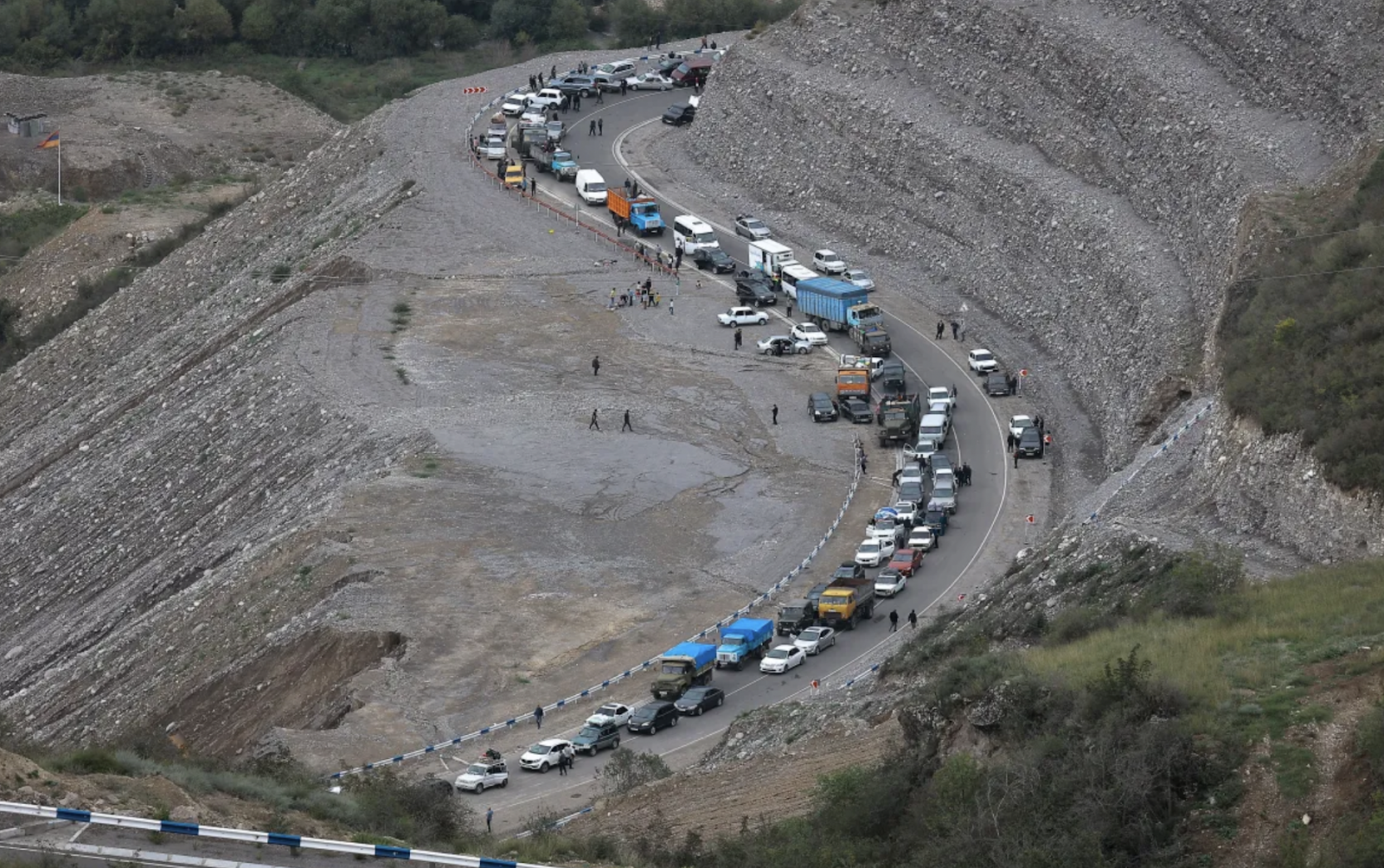
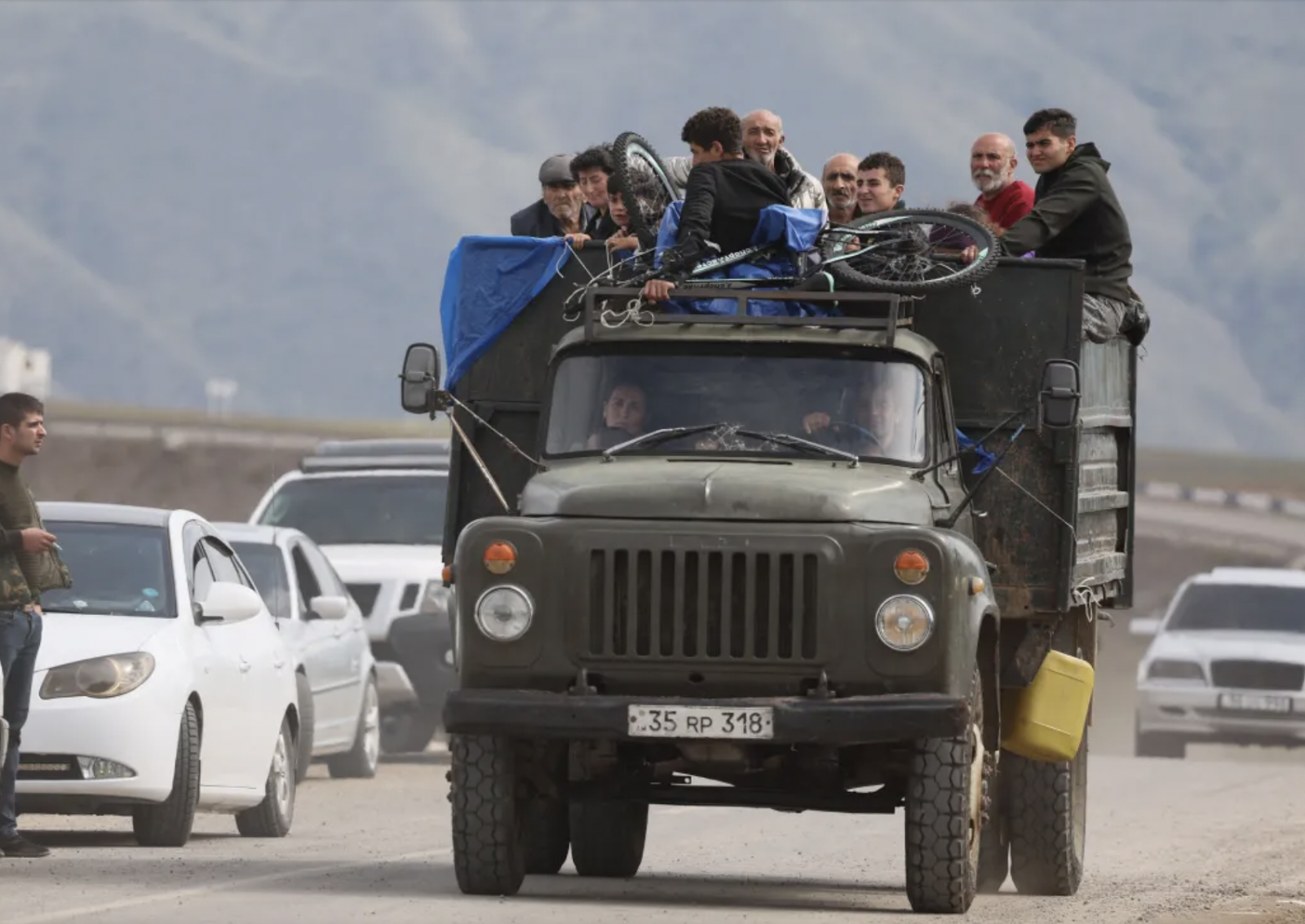
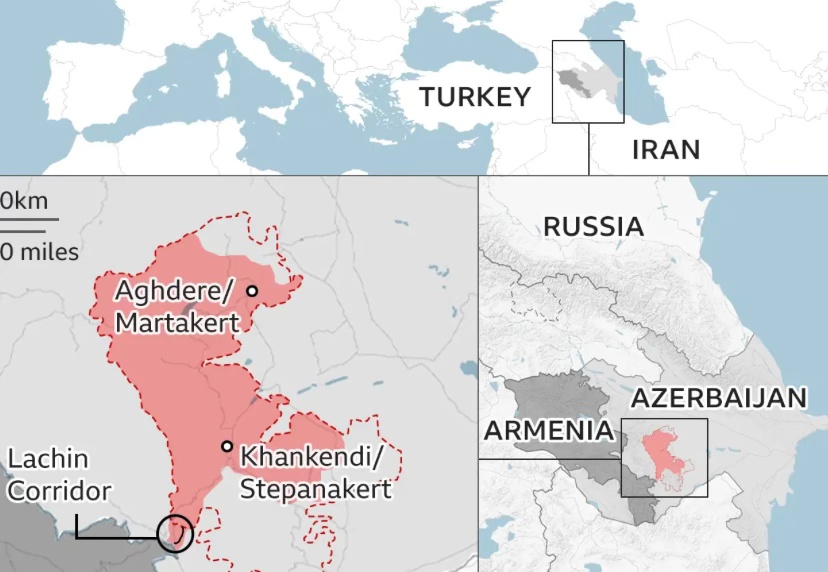
And so, in the beginning of my new cultural learnings, I began to find these people, coming from various places they could no longer live in, places their families had called home for longer than they could trace. I stumbled into these conversations accidentally at first, sometimes in a restaurant, a museum, a grocery store…quite often in a pub, and I began to talk to them about their lives and their stories of fleeing.
I have not stopped meeting these people, and continue to find commonalities in what I find to be endlessly intriguing stories. They are stories of pain, but also, in a way, of this perseverance I find fascinating. There is truly never an air of complaint when I hear these recounts, only of gratitude for the outcome that has been found. There is an obviousness to the most extreme decisions, like the decision to pack up and accept that you are saying goodbye to your home, and in a broader context, your homeland. It is often accompanied with a shrug that says ‘what else could I do?’.
And I cannot help but come to understand that which is simultaneously almost entirely incomprehensible to me. They all had to search for peace.
Peace is something that we have in a way in the states that did not allow me to understand the reality of conflict abroad before living within its world.
Of course we have violence, and American violence holds its own brand, its own muddied flavor and history. I understand that a comparison may do me no favors here. This may be especially true for me, having the privileged background I have. But from what I have seen and know to be true, I truly believe that our American violence does not, cannot be held in comparison to the violence in the regions that surround me now. I understand that our violence is intense and visceral for many, but this part of the world has something different. It is the extreme nature of the bombings of cities, of active warzones, of the crumbling buildings and governmental overthrows that forces people from their houses, from their communities, from their homes.
American violence is a candle in a world of carpet bombing and mass displacement. It is a drop of water in a quivering lake of ancient power struggles, the level of which we cannot comprehend, let alone find solutions to.
So, for the refugees; the Western and Eastern Armenians, for the Ukranians, and for the Russians coming from experiences like this, wherever they are, to come to a place like Yerevan is a breath, a moment of release. It is a haven where almost everyone in the city is genuinely, fundamentally safe.
Learning this has caused a profound shift in my understanding of this term Home. Of course I did not come here from some atrocity. I did not flee my home in the night, never to see it again, and I did not lose loved ones on the way. I am safe here. I come from safety. I will return to safety when I leave, and to my home no less.
This understanding however, of what a home can be; a refuge, an imperfect moment of safety, a breath… This is what has changed my perception on the definition of the word itself.
I am constantly amazed by the resilience of people. The ability to see the truly unfathomable horrors of war, of utter destruction, and to move away from everything you have ever known to find a new space, a new house, a new community, that is strength.
And so my definition of home has changed. It had to. Anything else would be numb, blind to the fundamental understanding of the stories that have been shared with me.
I have come to learn that a home does not need to be a place of comfort. It does not need to be a place of happiness and a well established community. These things are amazing, and they create something bigger, but to me, the definition of a home has become much more simple.
Fundamentally, a Home is a space of living. It is a place of rest, and of understanding, of learning and of growing. It has a fence of safety and a pillow of hope. To expect any more, would be ungrateful.
I have more thoughts – some with less gravity.
I’ll be back soon
D

 Drew's Whirled Adventures
Leave a reply to vibrant2fb163c8e9 Cancel reply